

Dr David: Cataract Surgery & AI Transforming Eye Care SG
In artificial intelligence, eye conditions are being identified and treated differently, including the bladeless cataract surgery in Singapore. AI assists clinicians and enables more accurate, consistent, and patient-specific data-driven insights in detecting and identifying diseases, as well as in surgery, which means it can start at an early stage of diagnosis and could aid in the precision of its outcomes.
How AI is Transforming the Early Detection of Cataracts
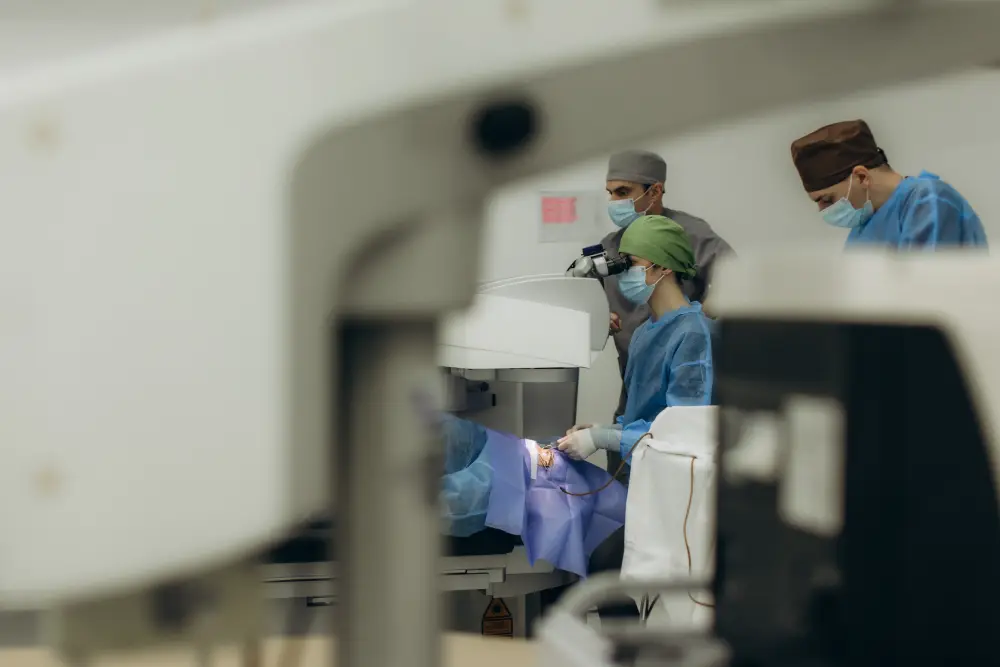
Cataracts are usually progressive, and the initial symptoms may be missed when performing normal daily tasks like travelling on the MRT or reading small print text on a phone. Retinal images and the clarity of lenses can now be analysed by artificial intelligence systems with high sensitivity, aiding in identifying minor changes even before they manifest themselves as symptoms. It has been demonstrated that the AI-assisted imaging is able to detect the degree of cataract with an accuracy similar to that of trained clinicians (Liu et al., 2019, Nature Medicine). This enables early monitoring and timely decision to undergo cataract surgery, including the availability of bladeless laser cataract surgery in Singapore, which could be considered at the time when the vision starts to influence daily functioning.
The Accuracy of Planning in Bladeless Cataract Surgery
The planning phase in the bladeless cataract surgery is very important, with measurements of the eye determining how to approach surgery and the lens to use. Intelligent systems are useful as they analyse the curvature of the cornea, axial length and lens density, producing less variation in the calculations. As it has been studied, biometric analysis prediction conducted with the use of AI can enhance the accuracy of the intraocular lens prediction (Kane et al., 2016, Ophthalmology). In Singapore, patients are often exposed to prolonged screen use and urban glare; this accuracy allows custom surgical planning, especially in situations of Singapore bladeless laser cataract surgery, where laser accuracy relies on the mapping.
Live Instructions in Bladeless Laser Cataract Surgery
In the bladeless cataract surgery with Lasers, the cataract and the incisions are produced by the femtosecond Lasers. AI adds to this process by guiding the position of the laser and real-time adjustment of parameters. This lowers the variability of results on hand and encourages uniform results. It has been reported that laser-assisted cataract surgery has better precision in capsulotomy and lens fragmentation (Abell et al., 2015, Ophthalmology). These refinements are specifically applicable to bladeless cataract surgery in Singapore, where a large number of patients are treated, and therefore, the techniques have to be reliable and repeatable.
Enhancing Surgical Safety and Reliability
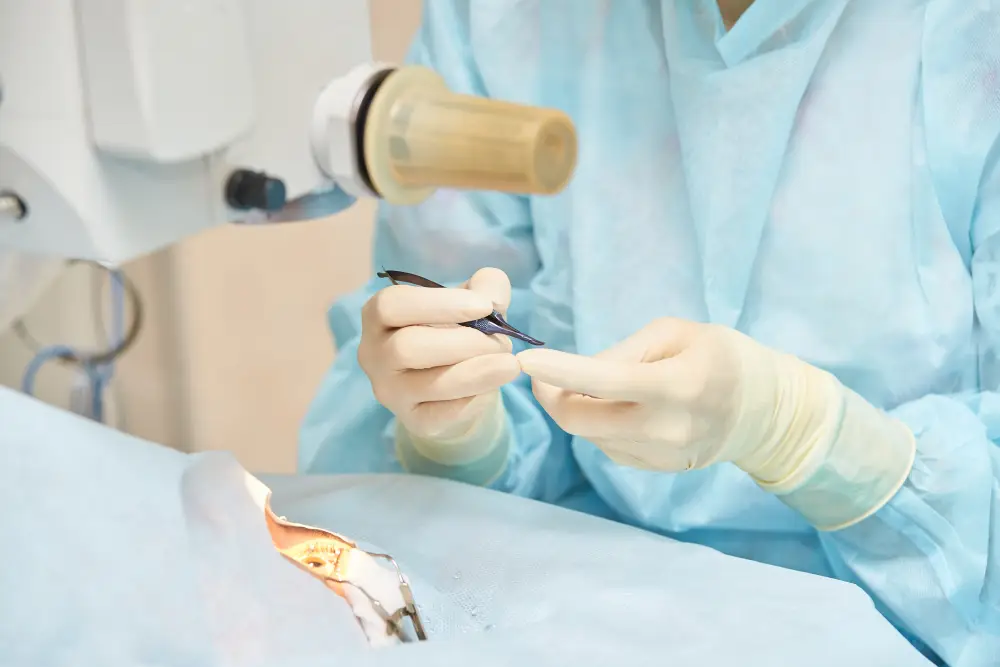
Artificial intelligence can help in enhancing safety through the detection of risk factors pre-operatively and intra-operatively. As an example, AI models can anticipate conditions like rupture of the anterior capsule with the use of patient-specific data (Roh et al., 2021, Scientific Reports). This helps the surgeons to make modifications. In Singapore, where bladeless cataract surgery allows patients to come with different levels of cataract density, the insights offered by AI help to ensure consistent performance of the surgery while reducing reliance on manual judgment.
Enhancing Patient Understanding Through AI Visualisation
Cataract progression may be difficult to understand for patients, particularly when the symptoms occur gradually. Visual simulations that use AI can be used to show the impact of cataracts on eyesight, including more glare due to the presence of headlights on roads or less contrast in brightly lit environments such as shopping malls. The tools will assist the patients to make wise choices regarding cataract surgery or to undergo a bladeless laser cataract surgery in Singapore. Evidence indicates that patient education and satisfaction with ophthalmology consultations are enhanced with the use of visual aids (Houts et al., 2006, Patient Education and Counselling).
Post-Surgical Monitoring with AI
Follow-up care in bladeless cataract surgery is necessary to keep track of recovery and visual performance. Follow-up scans can be examined by AI to identify the initial signs of complications, including posterior capsule opacification. Monitoring automation minimises the use of subjective evaluation and enables timely intervention. Digital health studies have shown that AI-assisted follow-up has the potential to enhance the detection of post-surgical changes (Topol, 2019, Nature Medicine). This is becoming more applicable to bladeless cataract surgery in Singapore, where effective follow-up systems facilitate patient convenience and clinical precision.
How Artificial Intelligence Supports Bladeless Cataract Surgery
| Aspect | Conventional Approach | AI-assisted Approach | Clinical Impact |
| Identification | Symptom-related and clinical observation | Image-based analysis with AI | Early and more accurate identification |
| Planning | Manual biometric calculations | AI-assisted analysis of measurements of the lens | Improvement of lens selection accuracy |
| Operation | Laser controlled by the surgeon in real time | Adjustments controlled by AI in real time | More precise and consistent operation |
| Observation | Manual follow-ups are conducted periodically | Scan analysis with AI assistance | Quick identification of post-surgical changes |
What To Watch For
- Getting more glare in the headlights or street lighting at night.
- Frequent changes in spectacle prescription.
- Problem viewing the menu in hawker centres under artificial light.
- Vision appears dull or slightly yellow.
- Poor vision even with new glasses on.
These symptoms can be signs of cataract progression, and they need to be evaluated in a clinical manner.
When to Seek Medical Attention
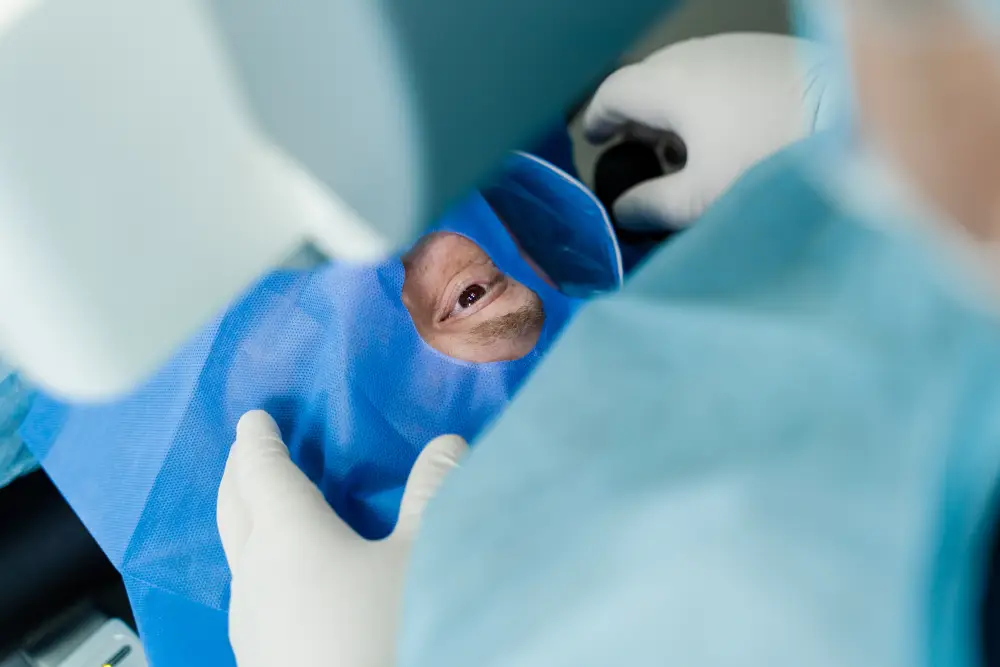
When the vision changes start to interfere with the daily routine of driving, reading or face recognition, a medical assessment is suggested. An eye care professional should evaluate persistent glare, low contrast, or regular swapping of prescriptions. Early consultation enables proper monitoring and discussion of treatments, such as cataract surgery with or without a blade, in Singapore, which is bladeless cataract surgery or bladeless laser cataract surgery, according to clinical results.
About Dr David Goh
The clinic of Dr David Goh offers the evaluation and treatment of cataracts, such as the Singapore bladeless laser cataract surgery and the traditional cataract surgery methods. The clinic is aimed at proper diagnosis, individual planning, and effective communication with patients and is backed by the latest imaging and surgical resources.
Conclusion
Artificial intelligence is also changing the way cataracts are screened, planned and treated, especially in bladeless cataract surgery in Singapore. These innovations enable more accurate diagnosis, uniform performance of surgery and better comprehension of the patient. In case the vision changes are impacting everyday life, a clinical examination can be conducted to find out the most appropriate follow-up.