

Key Questions To Ask an Ophthalmologist During a Consultation
If you are considering cataract surgery in Singapore, do a consultation to ask about the procedure, lens options, risks and recovery. You should also ask whether bladeless cataract surgery is suitable for your eyes or not. The right questions can help you understand your options before deciding for the surgery.
What type of cataract surgery do I need?
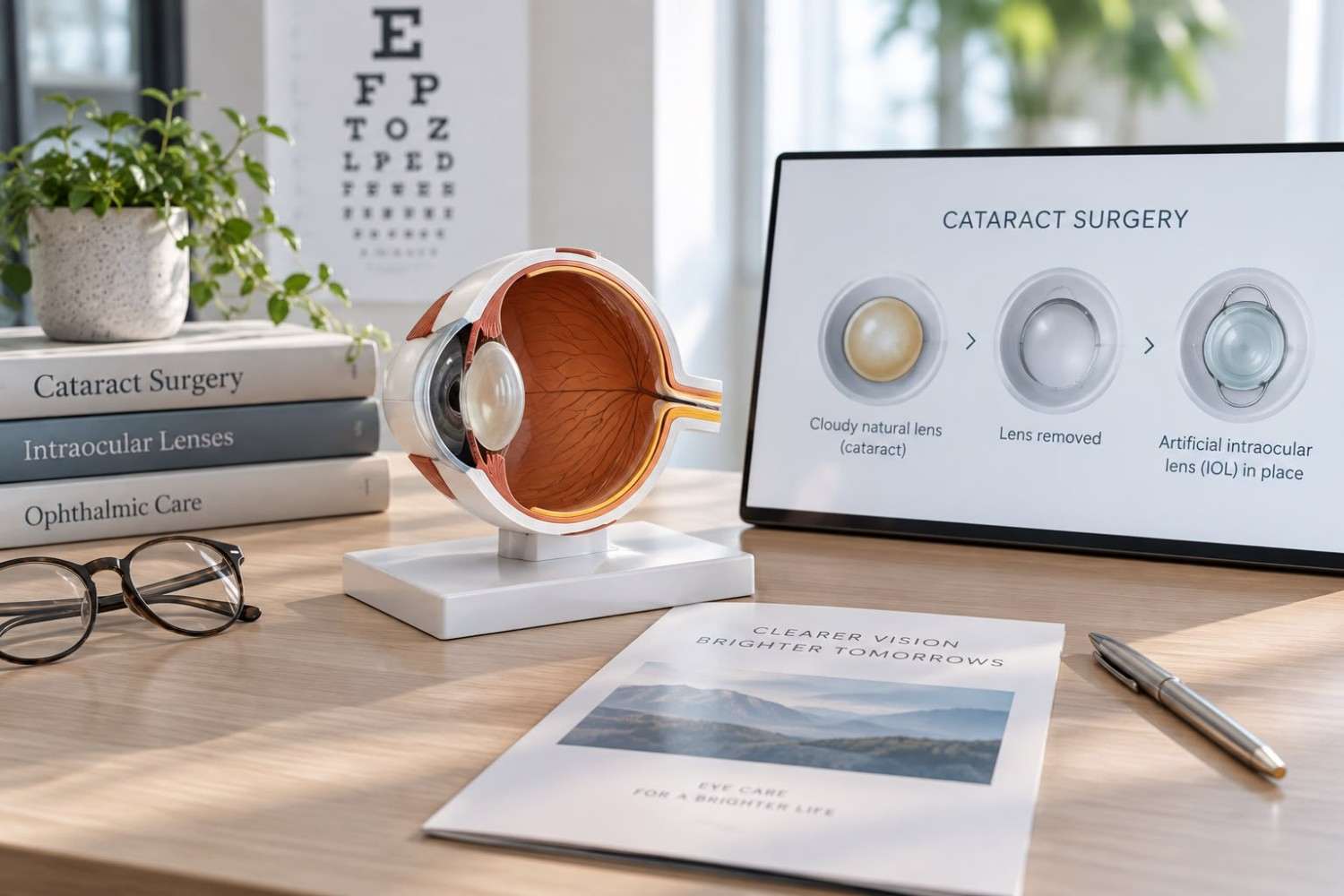
Ask the ophthalmologist which procedure they recommend and why. Cataract surgery removes the cloudy natural lens and replaces it with an artificial intraocular lens. Your eye health, vision requirements and previous eye problems can all affect the surgical plan.¹
If you are looking into Singapore cataract surgery, ask what will happen before, during and after the procedure. You should know what the operation involves before you agree to it.
Which lens should I choose?
There is no single lens that suits everyone. Ask about the different intraocular lens options available to you. Multifocal lenses can improve near and intermediate vision and may reduce the need for glasses, but they can also increase the likelihood of glare and halos compared with monofocal lenses.²
Tell the ophthalmologist what you normally do. Reading, driving, computer work and other daily activities can affect which lens options are worth discussing.
Could another eye condition affect my surgery?
Tell your ophthalmologist about previous eye problems, surgery and ongoing symptoms. Dry eye is worth mentioning too. Cataract surgery can affect the ocular surface, and existing dry eye or meibomian gland problems may influence symptoms after surgery.³ Ask whether you need treatment or further assessment before the operation.
What risks should I know about?
Ask about the risks that apply to your eyes. Cataract surgery is a common procedure, but complications can occur. These include infection and problems involving the lens capsule or other structures inside the eye.⁴
You can ask:
- Which complications are most relevant to me?
- What symptoms should I report after surgery?
- When should I contact the clinic?
- What happens if there is a complication?
You do not need a long medical explanation. You need to know what could happen and what you should do if something feels wrong.
Is bladeless cataract surgery suitable for me?

Ask this directly if you are considering bladeless cataract surgery in Singapore. Bladeless surgery usually refers to femtosecond laser-assisted cataract surgery. The laser can perform some steps of the procedure, including creating corneal incisions and opening the lens capsule.⁵
It does not automatically mean better vision. A large randomised trial found conventional phacoemulsification was not inferior to femtosecond laser-assisted surgery for several important one-year outcomes.⁶
So ask a more useful question: “What benefit would the laser provide in my particular case?”
Which questions should you take to the consultation?
You do not need to remember everything. Write down the questions you want answered.
|
Question |
Why ask it? |
|
Which lens is right for me? |
Different lenses suit different vision needs. |
|
What are my surgery options? |
Helps you understand the recommended approach and alternatives. |
| Is bladeless surgery suitable for me? | Shows whether laser-assisted surgery is appropriate for your eyes. |
| What risks should I know about? |
Helps you understand possible complications and warning signs. |
| What will recovery involve? |
Lets you plan for follow-up and temporary activity restrictions. |
What should you ask about recovery?
Ask when you can return to your normal routine. Find out whether you will need someone to take you home and whether you need time away from work or driving. Also ask about follow-up appointments and eye drops. Your ophthalmologist can explain what recovery should look like and which symptoms need attention.
If you are planning cataract surgery, these practical details are just as worth discussing as the operation itself.
How should you choose a cataract surgeon?
Look beyond the procedure name. Ask who will perform the surgery, what type of cataract cases they handle and who will look after you afterwards.
When comparing a cataract surgeon in Singapore, you can also ask who you should contact if you have a concern after the operation. You should know who is responsible for your follow-up care.
What if I am considering bladeless surgery?
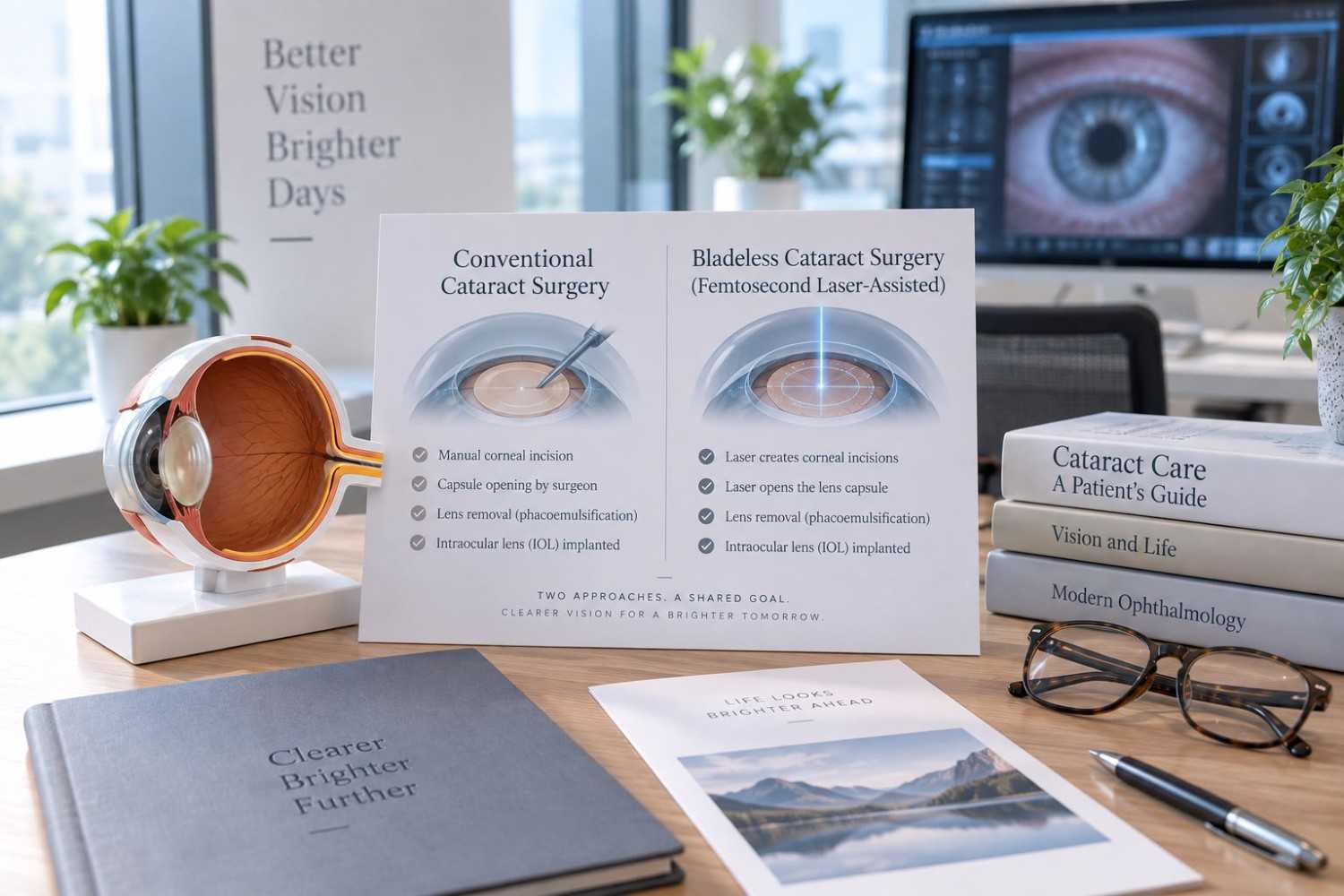
Do not choose it simply because it sounds more modern. Ask what the laser changes in your procedure and whether those changes are likely to matter for your eyes.
Research comparing femtosecond laser-assisted surgery with conventional surgery has found differences in some surgical measurements, but this does not mean every patient will have a meaningful visual advantage.⁶
If you are specifically researching bladeless cataract surgery, ask about the expected benefit, additional cost and whether conventional surgery would be equally suitable.
What should you leave the consultation knowing?
You should know which procedure has been recommended, which lens is being considered, what the main risks are and what recovery will involve.
If you are comparing Singapore cataract surgery, ask the same basic questions at each consultation. That makes it easier to compare the information you receive rather than comparing procedure names alone.
For people considering cataract surgery in Singapore, the decision should come down to their individual eyes and visual needs. If bladeless cataract surgery in Singapore is an option, ask exactly what it would add to your treatment.
Dr David Goh can discuss the procedure, lens choices and surgical options with patients during a cataract consultation, so they can understand what is being proposed before making a decision.